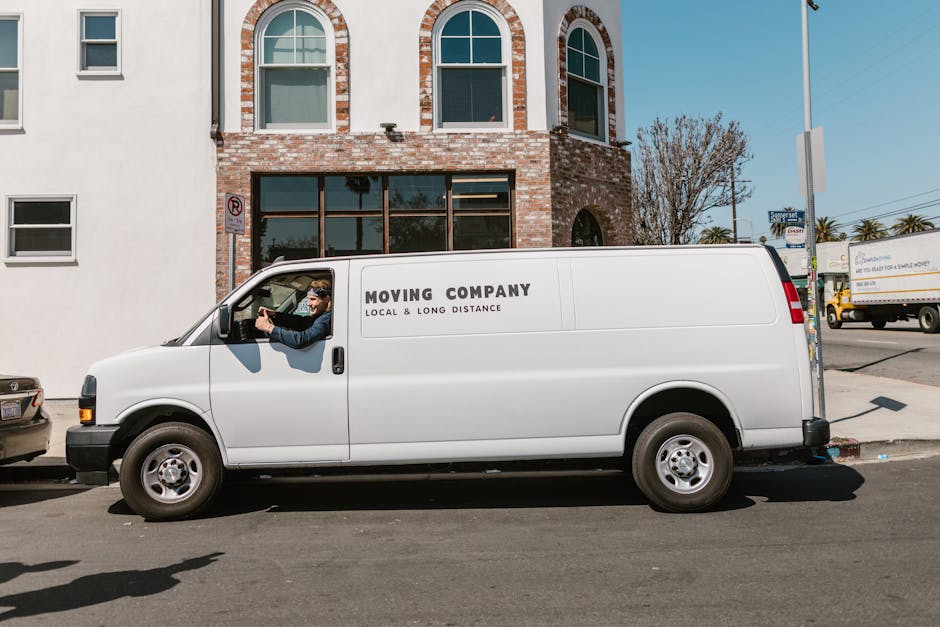
Goldhawk Road man and van tips for tight street parking
If you are moving on or near Goldhawk Road, the parking can be the thing that turns a simple van job into a bit of a juggling act. Narrow lanes, busy kerb space, residents' bays, delivery vehicles, and the usual London impatience can all pile up at once. That is why Goldhawk Road man and van tips for tight street parking matter so much: they help you plan the access, protect your belongings, and keep the move moving without unnecessary stress.
In practice, the difference between a smooth job and a frustrating one is often just a few small decisions made before the van arrives. Where can it stop? How long can it stay? Is there room to load without blocking a busier stretch of road? And, to be fair, do you really want to discover all this while standing on the pavement with a sofa in the rain?
This guide walks you through the real-world side of moving in tight West London streets: how man and van services handle parking constraints, what to check in advance, which mistakes cause delays, and how to make the most of a small window of space. If you are comparing services, it can also help to look at broader support such as man and van support, the right removal van, or fuller removal services when access gets more complicated than expected.
Table of Contents
- Why Goldhawk Road man and van tips for tight street parking Matters
- How Goldhawk Road man and van tips for tight street parking Works
- Key Benefits and Practical Advantages
- Who This Is For and When It Makes Sense
- Step-by-Step Guidance
- Expert Tips for Better Results
- Common Mistakes to Avoid
- Tools, Resources and Recommendations
- Law, Compliance, Standards, or Best Practice
- Options, Methods, or Comparison Table
- Case Study or Real-World Example
- Practical Checklist
- Conclusion
- Frequently Asked Questions
Why Goldhawk Road man and van tips for tight street parking Matters
Goldhawk Road sits in an area where the street environment can change quickly from one block to the next. A spot that looks fine from a distance may turn out to be too narrow once a larger van pulls in, or too busy because local traffic keeps moving. That is exactly why careful parking planning matters before a man and van move begins.
Parking is not just a convenience issue. It affects loading distance, labour time, item safety, and sometimes even whether the move can be completed in one visit. If the van must stop far away, every box, mattress, and wardrobe has to be carried further. That means more handling, more time, and more chance of knocks or fatigue. In a tight street, a poor parking decision can ripple through the whole job.
There is also a psychological side, oddly enough. People underestimate how much calmer a move feels when the vehicle is positioned sensibly. You can lift, stack, and pass items with a rhythm. Without that, everything becomes stop-start. A small issue becomes a noisy little headache. One wheel on the kerb, one impatient driver behind you, and suddenly the whole thing feels like a minor production.
If you are arranging a move in a narrow Goldhawk Road side street or a flat with limited frontage, parking planning is one of the most practical forms of risk control. It protects the furniture, the building entrance, and your own time. It also helps you decide whether a standard van is enough or whether something closer to a moving truck or a more specialised arrangement makes more sense.
How Goldhawk Road man and van tips for tight street parking Works
The basic idea is simple: reduce uncertainty before moving day. On a street with limited parking, a good man and van team will usually assess the access, estimate where the vehicle can stop, and plan the loading route from doorway to van. That may sound obvious. In reality, it is the part that saves the most time.
Here is how it usually works in a sensible move:
- Check the access point first. Is it a front door, a basement flat, a rear mews, or a shared entrance? Each one changes where the van can stop.
- Measure the practical loading space. Not just the van length, but the stretch needed for a ramp, open doors, and a safe gap around the vehicle.
- Match vehicle size to road conditions. A smaller van can often fit where a larger lorry cannot. That matters more than people think.
- Time the arrival carefully. Early morning can be quieter, but some streets fill quickly with residents, trades, and deliveries.
- Plan for walking distance. Even a short carry from the van to the property can save the day if direct parking is impossible.
In a tight London street, flexibility is everything. Sometimes the van can stop directly outside for ten minutes. Sometimes it has to use a legal bay a little further along the road. Sometimes the driver needs to wait nearby while a loading space opens. You do not want a plan that only works if the street is magically empty, because let's face it, that rarely happens.
A helpful approach is to discuss the job in terms of access conditions, not just "parking". That means talking about doorway width, stairs, pavement width, and whether bulky items can turn corners cleanly. For flat moves, especially, the job is often about the route rather than the address. If the route is awkward, a flat removals style approach may be the better fit.
Key Benefits and Practical Advantages
When you get the parking side right, the benefits show up in multiple ways. Some are obvious. Some only become clear when you compare them with a badly planned move.
- Less handling time: closer parking means fewer steps and fewer lifts.
- Lower damage risk: furniture is carried less distance, so there is less chance of scraping, dropping, or twisting an awkward item.
- Better use of labour: the mover can focus on loading well instead of wasting energy on extra walking.
- More predictable timing: accurate access planning makes the schedule much easier to keep.
- Reduced stress: you spend less time wondering whether the van can stop legally and safely.
There is also a cost angle, though it should be handled carefully. Tight parking can increase labour time, and labour time affects overall quotes. It is not that every tricky road automatically costs more, but the more uncertain the access, the more important accurate quoting becomes. That is one reason readers should review pricing and quotes early, rather than leaving parking details until the last phone call.
Another advantage is confidence. If you know the vehicle size, the loading point, and the likely stopping spot, you can pack with purpose. You will know whether to keep fragile boxes near the front door, whether to dismantle a bed in advance, and whether the biggest items need a clear path out first. A little planning, a lot less chaos.
Who This Is For and When It Makes Sense
This advice is not just for one type of move. It is useful for anyone dealing with limited roadside space, but especially for the following:
- Flat movers who live on busy roads with little or no dedicated parking.
- Students moving in or out of shared accommodation where access can be cramped.
- Home movers on residential streets with resident bays, permit zones, or constant turnover.
- Office relocations where deliveries, staff parking, and customer access all compete for the same kerb space.
- Furniture pick-ups when a single heavy item needs a very short and efficient loading stop.
If your move involves only a few boxes and a couple of bags, parking may be less of a headache. But once you add a wardrobe, a sofa, white goods, or a piano, the access question moves right to the top of the list. For specialist handling, you may also need to consider furniture removals, piano removals, or even storage if the timing does not line up neatly with move-in day.
It makes sense, too, if you are the sort of person who wants fewer unknowns. Not everyone enjoys a last-minute parking puzzle at 8am. Some people do, apparently. Those people are unusual.
Step-by-Step Guidance
Here is a practical, no-nonsense way to plan a man and van move on a tight Goldhawk Road street.
1. Walk the route before the van arrives
Stand outside the property and look at the route as if you were carrying the heaviest item yourself. Where are the steps? Where does the pavement narrow? Is there a tree, railings, a bin collection point, or a parked car that will block the path? What looks "fine" from a window can feel very different on foot.
2. Identify the most realistic loading point
Do not assume the front door is automatically the best place to stop. Sometimes the best loading point is one doorway up, or a legal bay a short distance away. The aim is not perfection. The aim is a reliable, safe stopping point that keeps the job moving.
3. Choose the right vehicle size
If the street is especially narrow, a smaller van can be far more useful than a larger one. Larger is not always better. A compact van may need an extra trip, but it can save more time overall if it can actually park properly. This is where the difference between man with a van and a larger vehicle hire becomes practical, not theoretical.
4. Prepare the items for fast loading
Boxes should be sealed, labelled, and stacked near the exit if possible. Flat-pack items should be dismantled in advance unless the mover has been asked to do it. Keep screws, keys, and small fixings in one bag. It sounds basic, but basic is what saves time when the van is waiting outside and traffic is building behind it.
5. Build in a buffer for parking delays
If the road is busy, do not schedule the move so tightly that one small delay throws off the whole day. Build in a little breathing room. Even fifteen minutes can make the difference between relaxed loading and a frantic shuffle with someone standing in the rain saying, "We just need to move this one thing..."
6. Keep the load sequence logical
Start with the bulkiest items and place them in the van first if they are going to the far end. Keep fragile or awkward items where they can be secured early rather than squeezed in last. If there are stairs involved, organise the route so the team does not keep crossing itself. Small detail, big difference.
Expert Tips for Better Results
These are the small things that tend to separate an average move from a smooth one. Nothing dramatic. Just the stuff that people only learn after a few London moves, or after one very annoying one.
- Use the quietest practical window. Early daytime slots can be easier than mid-morning rush periods, though local traffic patterns vary.
- Ask about van positioning before move day. A good team will think about turning space, kerb access, and where the rear doors can safely open.
- Keep the entrance clear. Shoes, plants, loose mats, and stacked bags near the doorway create a bottleneck.
- Use soft protection for tight corners. Blankets, straps, and covers are worth their weight when turning a sofa through a narrow hall.
- Label the awkward items. "Fragile", "This way up", or "Kitchen first" helps everyone stay efficient when space is limited.
One useful trick is to think in terms of loading rhythm. Can the van park, load, secure, and depart without repeated shuffling? If not, the parking plan needs adjusting. Simple as that. You want one clean flow, not six tiny interruptions.
For jobs involving multiple properties, commercial premises, or mixed loads, it can help to look at office removals or broader commercial moves if the access picture is more complicated than a standard household move. Sometimes the right answer is not a bigger effort, just a better-fitted service.
Common Mistakes to Avoid
Most parking-related moving problems come from a few predictable mistakes. Fortunately, they are easy to avoid if you know what to look for.
- Assuming the road will be clear: it rarely is, especially on a busy London stretch.
- Booking a van that is too large: size can become a problem faster than people expect.
- Ignoring loading restrictions: a spot that seems convenient may not be suitable at the time you need it.
- Leaving packing to the last minute: if boxes are still open, you lose valuable loading time.
- Not telling the mover about stairs or distance: access surprises are what cause delays.
Another common one is overconfidence. Someone says, "We'll just stop outside." That sounds neat until a delivery lorry turns up or the resident bays are full. Better to have Plan A, Plan B, and a calm attitude than one plan and a lot of crossed fingers.
Forgetting to protect the building entrance is another headache. Tight streets often mean tighter doorways, and tight doorways mean more chance of marking paintwork or scuffing a frame. If the move includes a lot of boxes or furniture, packing support such as packing and boxes can reduce the pressure before the van even arrives.
Tools, Resources and Recommendations
You do not need a bag full of specialist kit to manage a tight street move, but a few practical tools make life easier.
- Measuring tape: useful for checking doorway width, sofa depth, and clearances.
- Phone photos: send pictures of the frontage, entrance, and any awkward corners.
- Labels and marker pens: help speed up loading and unloading.
- Furniture covers and blankets: reduce scuffs in tight hallways.
- Simple loading plan: a written order for the largest or most awkward items can save time.
There are also a few service pages worth knowing about if your move gets more involved. If you need extra handling, see whether packing and unpacking services would free up enough time. If you are not moving everything in one go, storage may keep the schedule sane. And if you are comparing providers, it never hurts to look at the wider range of removal companies available before deciding.
For a move that needs a same-day turnaround, the parking plan matters even more. With limited time, every minute spent circling the block has a knock-on effect. That is where same-day removals can be useful, provided the access is discussed properly in advance.
Law, Compliance, Standards, or Best Practice
Without getting overly formal about it, there are a few UK best-practice points that matter on streets like Goldhawk Road. First, parking and loading should be treated carefully and lawfully. If a bay is restricted, double-yellowed, resident-only, or otherwise controlled, it is not something to "chance" because the van will only be there for a bit. That is a fast route to fines and delays.
Second, safe lifting and safe access are part of the job. Professional movers should work in line with sensible health and safety practice, use proper lifting technique, and avoid unsafe manoeuvres just to save a few metres. If access feels awkward, it is better to adjust the plan than to force a risky carry through a cramped gap.
Third, good operators should also carry appropriate insurance and treat property with care. If you are comparing providers, it is reasonable to review insurance and safety information and, more generally, the company's health and safety policy. That does not need to be dramatic. It just reflects normal due diligence.
There is also a customer-service side to compliance and professionalism. Clear terms, clear pricing, and clear communication matter. If a company sets out expectations honestly, you are less likely to get caught out by access issues or last-minute add-ons. In that sense, reading the terms and conditions and checking payment and security details is just sensible housekeeping.
Options, Methods, or Comparison Table
When parking is tight, you generally have a few ways to approach the move. None is perfect in every situation, so the job is to match the method to the street.
| Option | Best for | Pros | Trade-offs |
|---|---|---|---|
| Small man and van | Single flat, few items, narrow road | Easier to park, often quicker access | May need more trips for larger loads |
| Larger removal van | Bulkier furniture, fuller household moves | More capacity, fewer runs | Harder to park on tight streets |
| Staged loading with a nearby stop | Busy roads with limited kerb space | Flexible, often practical | More carrying distance, extra labour |
| Storage-first approach | Moves with timing gaps or access problems | Reduces pressure on move day | May add an extra step to the process |
As a rule of thumb, the best option is the one that fits the street as well as the load. Not the fanciest option. Not the biggest. The one that can actually work on the day without turning the pavement into a chessboard.
If you are unsure, a short discussion with a mover who understands local access can save you from booking the wrong vehicle. That is especially true for split moves, student moves, or homes where furniture is being collected and delivered to different places. In those cases, a standard removals approach may be more efficient than forcing everything into a single vehicle plan.
Case Study or Real-World Example
A typical Goldhawk Road move might look like this. A one-bedroom flat needs clearing on a weekday morning. The road is busy enough that the first instinct is to park directly outside, but the frontage is narrow and nearby bays are already partly occupied. There is no point pretending the van can sit there all day. It cannot.
So the mover and customer agree a better plan: the van arrives early, stops where there is a legal and workable gap a short walk away, and the heaviest items are loaded first while the route is kept clear. Boxes are grouped by room, the sofa is wrapped in advance, and the mattress is taken out before the hall gets crowded. Nothing glamorous. Just practical.
The result is a smoother flow. There is no repeated repositioning of the van, no last-minute panic over blocked access, and far less chance of the team having to carry items further than necessary. The job still takes effort, of course. Moving always does. But it feels organised instead of chaotic, which is a big deal on a street where there is no spare room to improvise.
That kind of setup is common in house removals and smaller flat clearances alike. It is also why local access knowledge matters. A mover who understands tight street parking does not just bring a van. They bring judgement.
Practical Checklist
Use this checklist before the van arrives. It keeps the move grounded and cuts down on avoidable surprises.
- Confirm the address, entry point, and any back entrance or side access.
- Check whether the van can stop legally and safely near the property.
- Measure large furniture and compare it with stairways and door widths.
- Tell the mover about residents' bays, permits, or timed restrictions.
- Decide which items need dismantling before moving day.
- Pack boxes fully and label the fragile or priority items.
- Clear hallways, doorways, and the first few metres outside the entrance.
- Prepare keys, lifts codes, parking details, and any building instructions.
- Allow extra time if the street is known to be busy.
- Ask about insurance, safety, and the expected loading approach.
Quick expert summary: the best Goldhawk Road move is usually not the one with the biggest van or the shortest quote. It is the one with the clearest access plan, the right vehicle size, and enough flexibility to handle a tight street without drama.
Conclusion
Goldhawk Road man and van tips for tight street parking come down to one thing: think access first, vehicle second, and timing third. If you get those three pieces right, everything else becomes much easier. The move feels calmer, the loading feels safer, and you are far less likely to get stuck in a frustrating cycle of "just one more try" with the van.
That does not mean every move will be effortless. Tight London streets are tight London streets. But with the right planning, the right questions, and a mover who understands how to work around limited kerb space, you can make even a tricky address feel manageable. Truth be told, that is often the real win.
If you are preparing a move and want practical help with access, vehicle choice, or timing, take a look at the service options that best match your situation and plan from there.
Get a free quote today and see how much you can save.
Frequently Asked Questions
What is the best van size for tight street parking on Goldhawk Road?
Usually the best van is the smallest one that can still carry your load efficiently. On tight streets, a compact or mid-size van often parks more easily and reduces loading stress. Bigger is not always better.
How early should I book a man and van for a busy London street?
As early as you can, especially if you need a specific time slot. Early bookings help you secure a sensible arrival window and give the mover time to plan the access properly. Last-minute bookings can still work, but they are less flexible.
Can a man and van stop directly outside my flat?
Sometimes, yes. But on a busy road it depends on the time of day, the loading restrictions, and whether legal kerb space is available. It is better to treat direct outside parking as a bonus, not a guarantee.
What should I tell the mover about street parking before moving day?
Tell them about bay restrictions, permits, narrow road sections, resident parking, steps, shared entrances, and any awkward corners. Photos are very helpful too. A couple of pictures can explain more than a long message, oddly enough.
Is it better to use a smaller van if parking is limited?
Often yes. A smaller van can be easier to position and may reduce the risk of blocked access. If the move is large, though, the team may decide a bigger vehicle is still the better choice overall. It depends on the load and the road.
How do I avoid delays when the street is crowded?
Pack in advance, clear the route, agree the loading point early, and allow a time buffer. If possible, avoid peak traffic periods. Tight streets and last-minute packing do not mix well.
Do I need permission to load on a restricted street?
That depends on the specific restriction and local rules. The safest approach is not to assume loading is allowed just because it is brief. Check the situation carefully and plan within the rules that apply to the road.
What if the van cannot park outside my property?
Then the team should plan a realistic alternative nearby. A short carry from a legal stop is often the practical answer. It may take a little longer, but it is far better than forcing a bad parking position.
Are man and van services suitable for flat moves in tight roads?
Yes, very often. They are a good fit for smaller flats, mixed loads, and moves where access matters more than volume. For fuller loads or trickier access, a more comprehensive removals approach may be better.
Can I combine storage with a tight-parking move?
Absolutely. Storage can take pressure off the moving day if parking, timing, or keys are not lining up neatly. It is a practical solution when the move has to happen in stages.
What is the main mistake people make with tight street parking?
They assume the van will simply fit and stop outside without issue. In London, that is often the first thing that goes wrong. A quick access check before moving day avoids a lot of grief later.
How do I know if I need a larger removals service instead of a simple man and van?
If you have bulky furniture, multiple rooms, awkward access, or a larger volume of items, a fuller removals service may be the more efficient choice. It is not about being over-prepared; it is about matching the service to the street and the job.